
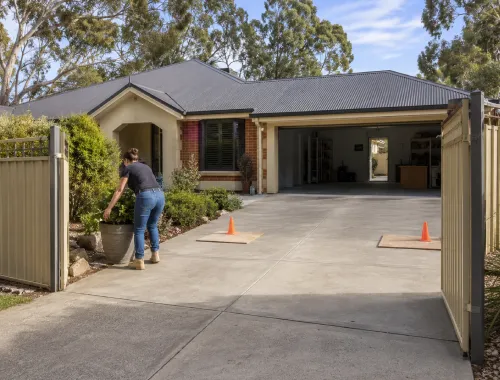
Prepare Your Property for Smooth Delivery
Prepare Your Property for Smooth Delivery
Choose the Placement Area Before Booking
Deciding where the bin will sit is one of the most important preparation steps. A suitable position should allow the delivery truck to approach, place the bin safely and return later for collection. Private property or a clear driveway is often the simplest option when access is suitable. Consider how the placement may affect vehicles, gates, pathways and daily movement around the property. Choosing the area early also helps you provide accurate delivery instructions and identify any access concerns before the booking is confirmed.
Keep the Truck Route Clear
The truck needs more space than the bin itself. Look at the full route from the street to the proposed placement area, including the entrance, driveway and turning space. Move parked vehicles, trailers, equipment or stored materials that may restrict access. Delivery may become difficult when the truck cannot line up correctly or leave the property safely. Keep the same route available for collection, as changes made during the hire period could prevent the truck from reaching the bin when it is ready to be removed.
Check Trees and Overhead Obstacles
Low branches, powerlines and other overhead obstacles can affect where a bin can be delivered. Walk through the proposed truck route and look above the driveway, gate and placement area. Branches that appear harmless from ground level may interfere with a larger vehicle or lifting equipment. Tell the business about anything that could limit overhead clearance rather than assuming the driver can work around it. Clear information allows the placement to be considered before arrival and reduces the chance of needing to select another position on delivery day.
Consider Driveway Width and Slope
Narrow entrances, tight gates and steep driveways should be disclosed before booking. A bin may fit through a gate even when the truck cannot approach or position it safely. Sloping ground can also affect how the bin sits and how easily it can be collected after loading. Check whether the driveway provides a stable, practical route and enough room for the truck to operate. When access appears restricted, describe the property clearly and discuss another position that may be easier to reach without obstructing neighbouring properties or public access.
Prepare Firm and Stable Ground
The selected area should provide stable support for the bin throughout the hire period. Soft soil, recently landscaped ground, wet lawn or loose surfaces may be unsuitable, particularly once the bin becomes loaded. Heavy material can increase the pressure placed on the surface beneath it. A firm driveway or another stable private area may offer a more practical option. Consider whether the surface could be marked or damaged and take appropriate precautions for your property. The final position must remain safe, level enough for use and accessible for collection.
Protect Access to Gates and Garages
A convenient delivery position should not create a new problem for the household, business or worksite. Check whether the bin could block a garage, gate, doorway, parking space, utility area or frequently used path. Think about how people and vehicles will move around the site during the entire hire period. Builders and tradies should also consider later material deliveries and equipment access. A little planning can prevent the bin from being placed where it interrupts work or needs to be moved, which may not be possible once delivery has been completed.
Plan for Safe and Practical Loading
Place the bin where approved waste can be carried to it without creating unnecessary risk. A shorter route may reduce repeated lifting, but convenience should not come at the expense of safe truck access. Keep the surrounding ground clear of loose materials, tools and trip hazards. Load items carefully and distribute the contents responsibly rather than placing all heavy material in one area. Waste must remain at or below the top rim, and branches or other items should not protrude dangerously. Safe loading supports smoother handling when the bin is collected.
Match the Waste to the Booking
Property preparation also includes checking what will be loaded. Confirm the correct waste category before delivery and keep prohibited materials out of the bin. A household clean-up, renovation or garden project may produce several different materials, so the project name alone may not identify the right category. Separate unsuitable items early and declare any accepted special items that carry individual charges. This prevents confusion while the bin is on site and makes it easier for everyone involved in the project to follow the same loading requirements.
Keep Collection Access Available
Conditions around a property can change during a clean-up or building project. Vehicles may be parked in new positions, building materials may arrive, gates may be locked or temporary equipment may block the driveway. Review the access route before the requested collection date and remove anything that could prevent the truck from reaching the bin. The load should be ready, safely contained and accessible without further work. If access circumstances change unexpectedly, contact the business early rather than waiting until the truck is due to arrive.
Check Public-Land Responsibilities Early
A bin placed on a road, nature strip or other public area may require council approval. Customers are responsible for checking and arranging any permit required for the proposed location. Do not rely on public-land placement until the relevant council has confirmed what is needed. Application processes and assessment periods may differ between areas, so allow enough time before choosing delivery dates. Where practical, a suitable position entirely within the property boundary can simplify planning, but it must still provide safe access and an appropriate surface.
Share Complete Delivery Information
Accurate information helps the business understand the property before dispatching the truck. Provide the full delivery address, preferred position and clear placement instructions. Mention narrow roads, tight gates, low trees, low powerlines, steep driveways, soft ground, parked vehicles or limited turning room. Photographs may also help when a location is difficult to describe, although any final placement must still be assessed according to the conditions on arrival. Honest details are more useful than discovering an obstacle after the truck has reached the property.
Prepare With Adelaide Skip Bin Hire
Adelaide Skip Bin Hire PTY LTD asks customers to provide accurate access and placement information before delivery. The team can discuss the proposed location, waste category, active bin sizes and requested dates while confirming current availability. Customers should keep the delivery area clear, maintain access for collection, follow relevant loading rules and arrange any required council permit. Preparing these details early supports a more organised booking and helps the delivery and collection stages proceed with fewer avoidable interruptions.